EAC-100 electroadhesive cord clutch
A 12 mm thick clutch for a cord: thin printed films lock together at 300 V and hold about 100 N while using milliwatts, with the safety-limited driver built into the frame.
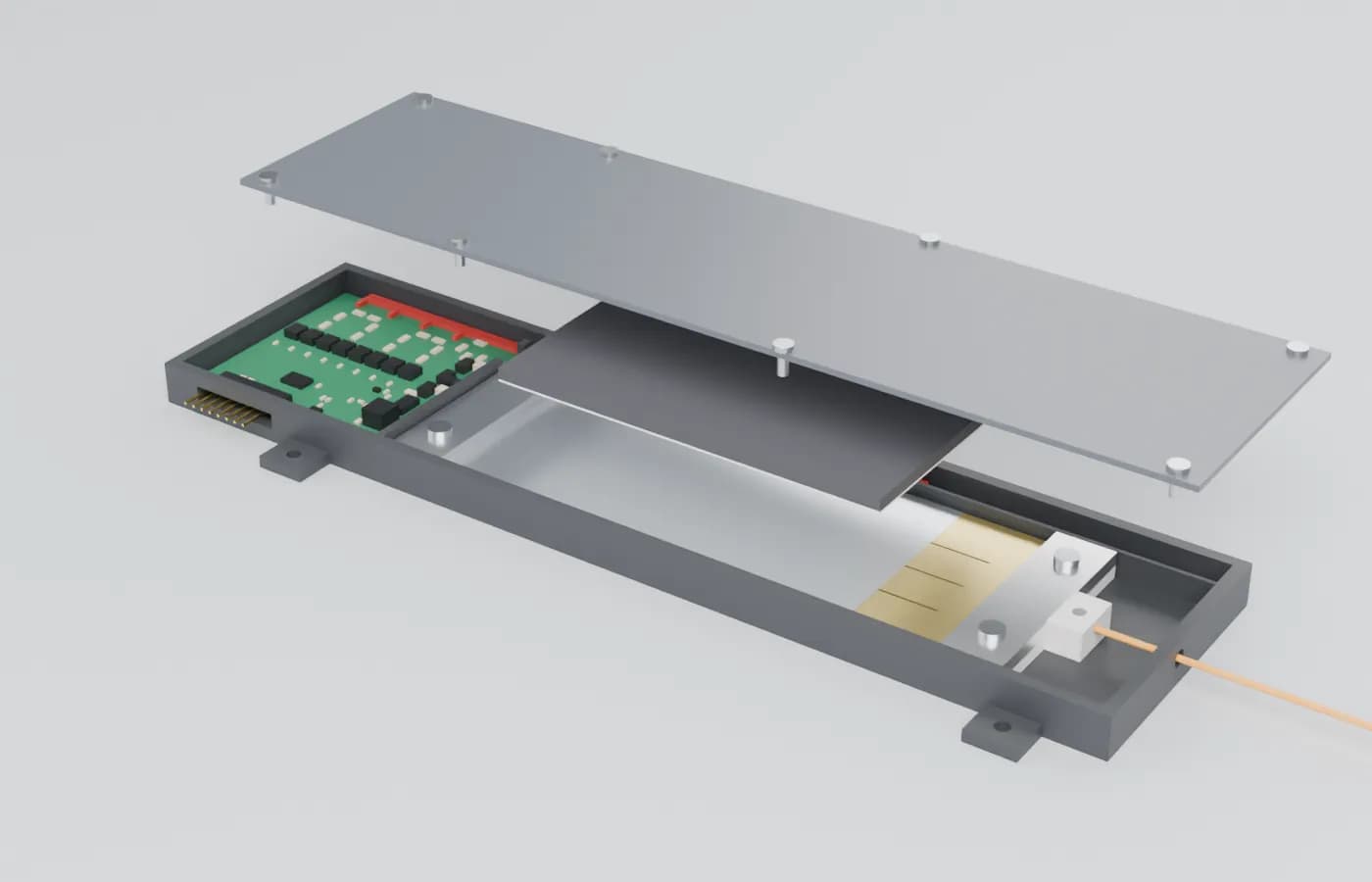
Electroadhesive clutches lock by electrostatic attraction between thin films. They are light, thin and use almost no power while holding, which suits wearable robotics and haptics research, but they need a high-voltage driver that is safe to have near people.
EAC-100 is a linear clutch: a cord runs through a stack of five printed films, and applying 300 V presses them together so the cord cannot slide. The driver in the frame limits current, reverses polarity to avoid charge build-up, and can release the clutch in a few milliseconds.
It runs from 5 V, so it can sit on a battery-powered device.
Design figures
- Holding force
- 100 N target design target
- Holding power
- about 66 mW for the whole driver calculated
- Engage / release
- about 25 ms / 7 ms simulated
- Film voltage
- 100 to 300 V, current-limited design target
- Input
- 5 V design target
- Stroke
- 40 mm design target
- Size
- 244 × 64 × 12 mm design target
Nothing has been built yet, so nothing here is measured.
How it works
Films and a cord
A cord is tied to one set of films that interleave with fixed films in the frame.
Voltage locks it
300 V across the films pulls them together and friction stops the cord moving.
Fast release
The driver discharges and reverses the films in milliseconds, and the cord runs free again.
10 use cases
10 of 10 use cases
- ResearchExoskeleton joint lockLock a joint in an exoskeleton research rig while the wearer rests, for almost no power.
- ResearchHaptic feedbackStop a finger or hand cord to make a virtual object feel solid in VR research.
- ResearchVariable-stiffness robotsSwitch a tendon between free and locked to change how a robot limb behaves.
- RoboticsTendon-driven grippersHold a grip without keeping a motor powered.
- RoboticsEnergy-saving brakeHold a light axis in place between moves instead of running a motor.
- RoboticsLegged robot researchStore and release energy in a cord during a step.
- TeachingElectrostatics labA hands-off demonstration of electrostatic force doing real work (driver current-limited).
- Product developmentThin brake for a product ideaTry a 12 mm thick, low-power lock in a prototype before choosing a mechanism.
- ResearchRehabilitation devices researchResist or lock movement in a lab-built rehabilitation device.
- Product developmentDriver board on its ownThe current-limited 300 V driver could power other electroadhesive or electrostatic experiments.
This is a friction clutch: it must never be the only thing holding a load, and its 300 V films are for research use, not consumer wearables.
Where it stands
Design concepts: none of these has been built or tested yet. Every figure is calculated, simulated, taken from a part's datasheet or a design target, and each one says which. Pictures are computer renders from the CAD models. These are our own designs of known ideas; similar products and patents exist.
Designed in-house down to circuit boards, firmware and CAD. The design is proprietary to Senova Systems and is not open source. Interested in this one for your lab or product? Our email is at the foot of every page.